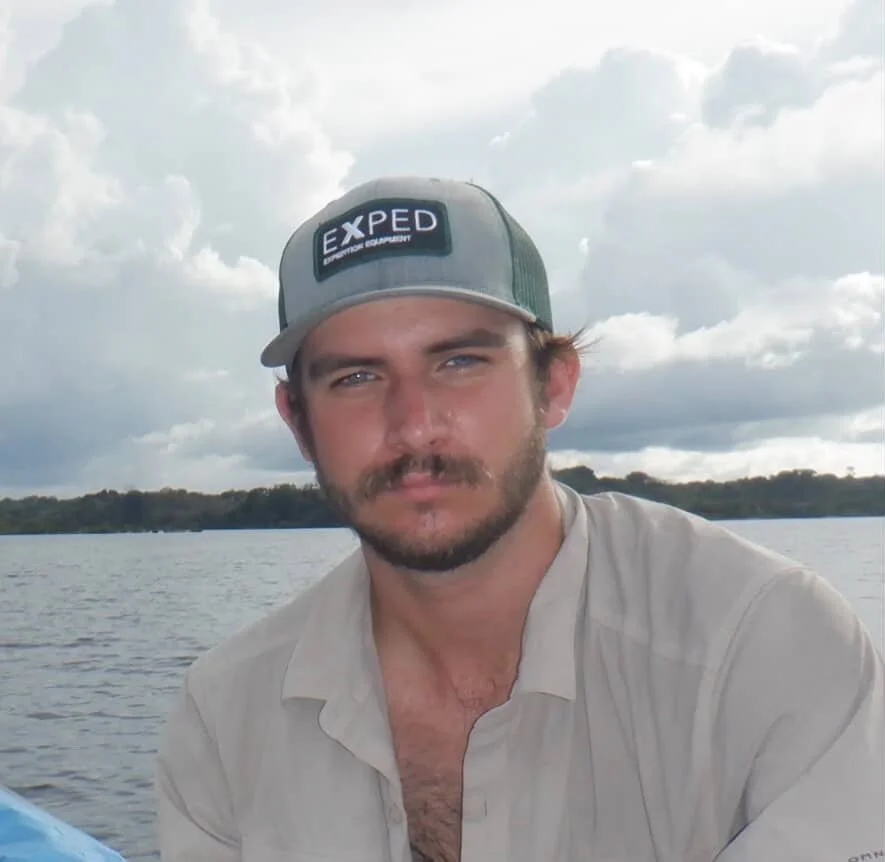
The Guyanas: Muddy Water and Mosquitos
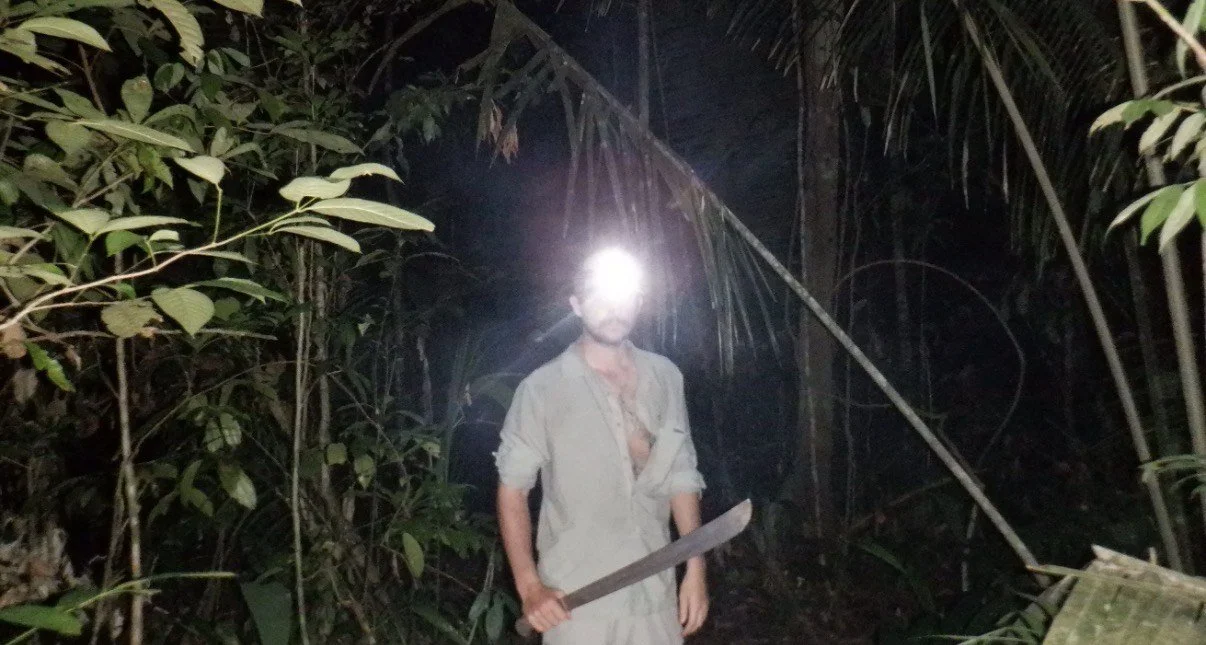
In Early 2025, a longtime friend and I set out to hitchhike through three of the most densely forested countries on Earth. We had a loose, optimistic, and probably ill-advised plan to reach the Amazon River delta in Brazil, where we’d board a ship and take it 1,600 miles upstream to Manaus, Brazil.
Prior to this trip, when thinking about South America, I typically imagined a Latin culture influenced by the Portuguese or Spanish, Cumbia Music on the radio and Latin food. I never expected to see Hindu temples, Euros for tender and African tribes living in the Amazon. Here is a brief description of these Countries in the order we traveled.
Guyana - A former Dutch, then British Colony in the Northeastern Amazon which gained its independence in 1966, shortly before the Bahamas.
Suriname - The Smallest country in South America, located just East of Guyana, it gained its independence from the Netherlands in 1975.
French Guiana - Further East is this a French Overseas Territory, essentially making this region diplomatically no different than the French Countryside.
These three countries are some of the smallest in South America rivaled only by Uruguay which comes second to Suriname.
Access by road is nearly impossible as there is only one unpaved road into Guyana on its southern border with Brazil, none into Suriname, and a lone toll bridge connecting French Guiana to Brazil. Logistically, this region of the continent may as well be an island considering most everything is imported via ship, aside from some agricultural goods and raw materials. This, combined with the lack of tourism infrastructure makes traveling here extremely expensive, comparable to the Caribbean islands.
Flying into Georgetown, Guyana’s capital, we got a final aerial view of the jungle spilling endlessly toward the southern Caribbean. It was the last time I was dry and clean for nearly six weeks. Below us stretched a flat, uninterrupted Amazon, broken only by the city and home to about 355,000 people, nearly half the country’s population. We were greeted by familiar Afro-Caribbean locals who share a similar accent to Jamaicans and Haitians a thousand miles away.
While we walked around the city, I was reminded of eastern Peruvian markets, specifically the sweet rot of overripe fruit colliding with the darker funk of meat that had seen better hours. Flip-flops slapped pavement in every direction and rainbow umbrellas shaded the stands like a patchwork ceiling.
On past trips I kept hitting the same wall; trying to find real, local and authentic food. We wandered through towns hoping for something that tastes like the place, and instead, the redundant fries, pizza, burgers. It took me a while to understand the economics of it. In countries with few visitors and higher poverty rates, eating out is a luxury. And if a local finally gets the chance to splurge on a meal they didn’t have to cook themselves, why would they order the same dish they grew up on? The real stuff still exists, but it’s tucked away behind someone’s house, in a market, or in the kitchen of a woman who doesn’t have a sign out front. You can find it, but you’re going to have to work for it.
Our evenings were filled with walks on the town searching for a hotel, then food, and then searching for our hotel again. Getting lost something we often attained and strived for. We knew, as long as we were heading east, we would eventually bump into the Amazon river.
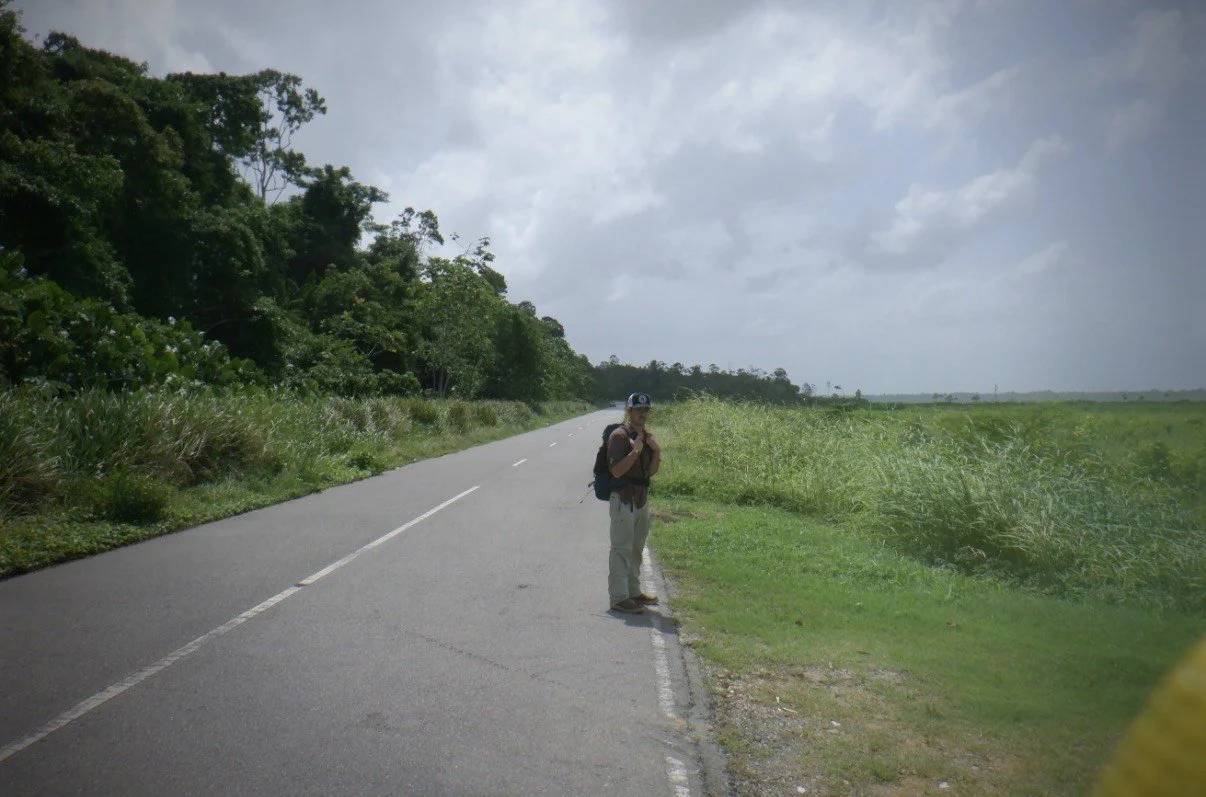
Hitchhiking was slow going. Many miles were spent walking alongside less than ideal volumes of traffic. We often got confused as people who had money by taxis who saw our thumbs up. We would send them on their way until eventually someone would offer a ride. One particularly kind man drove miles out of his way in his box truck to then haggle with our hotel manager before not accepting anything in return. He was of Afro-Indian decent and had an incredibly sad story about divorce and deportation from the US where he left his kids. Unfortunately he had overstayed his visa after his wife divorced him following her affair and is now unable to visit his children. He still sends them money even though the average monthly wage is 450 USD to the US’s 5,600 USD.
Eventually we were at the last town in Guyana before the river crossing to Suriname the following morning. This evening is when we discovered the yellow fever vaccine requirement and its strict enforcement. We then had a savvy unnamed friend back in the states forge copies of vaccine paperwork overnight before continuing on our way.
Upon our reaching entry port into Suriname and a nervous couple minutes we began walking along the only paved road. There was absolutely nothing around, just about 20 miles to town from the river crossing. Thankfully one of the half dozen cars parked at the border picked us up on the way to a town I can’t pronounce. Here we met fishermen and watched the flashy speed boats (drug runners) with them. The majority of people in Suriname are Hindustani and Indonesian whose grandparents immigrated here as cheap labor after the abolition of slavery. This results in the strangest mix of cultures I’ve ever had the pleasure to experience. Reggae Music, Hindu temples and wild food. All this aside, Dutch is the national language, which when spoken with a Caribbean accent sounds a lot like English. The common sentence structures made it incredibly difficult to differentiate, although reading wasn’t impossible here. Fish is vis, house is huis and goat is geit.
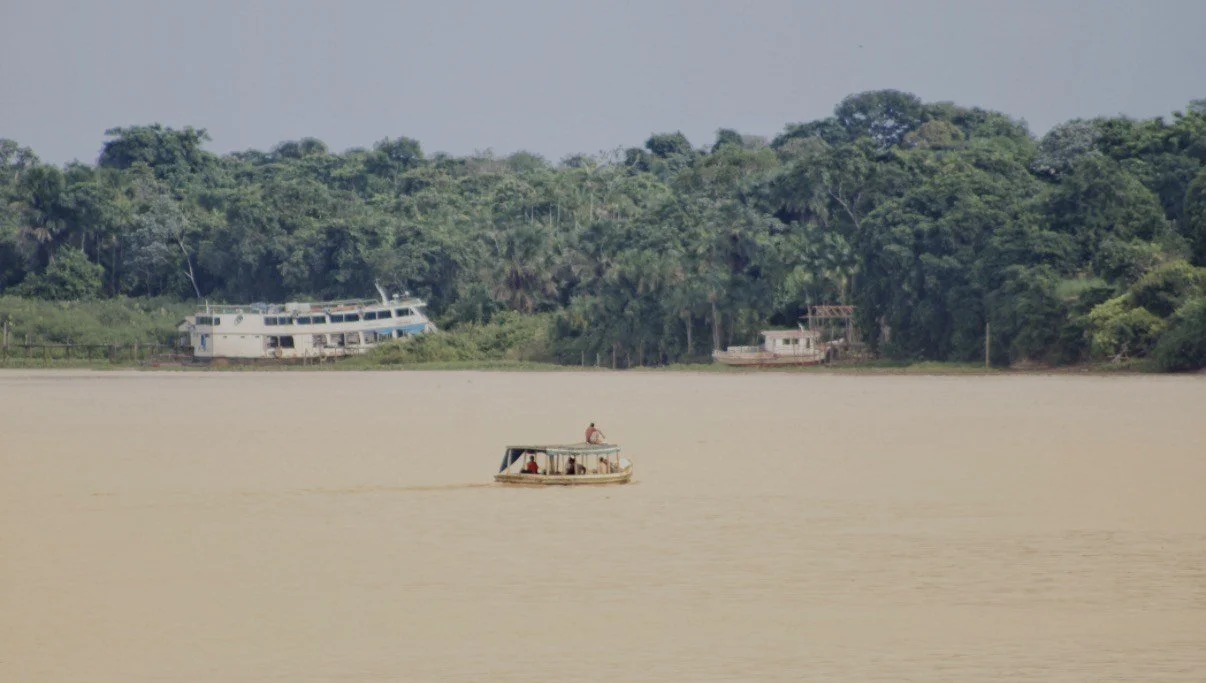
Paramaribo, the capital, was a beautiful colonial city with narrow streets lined with tall wooden buildings like nothing I’d ever seen till I visited the familiar looking Copenhagen a few months later. We spent the evening hanging out with locals in a beautiful palm grove while the sun set over the jungle canopy in the distance.
The next morning we made our way inland on scooters to come across a little village of three dozen or so families who were gathering to eat together in the town center. This little village was called Berg en Dal and is inhabited by descendants of escaped slaves have maintained their Congolese language, tradition and religion but adapted to the Amazon jungle. Most people were very kind and the “mayor” for lack of better term, came to greet us. We also met some shady characters but they didn’t bug us very long. Before leaving, the group warned us of the dangerous river but offered to accompany us if we wanted to go for a swim. We continued on our way riding back to the city in the rain.
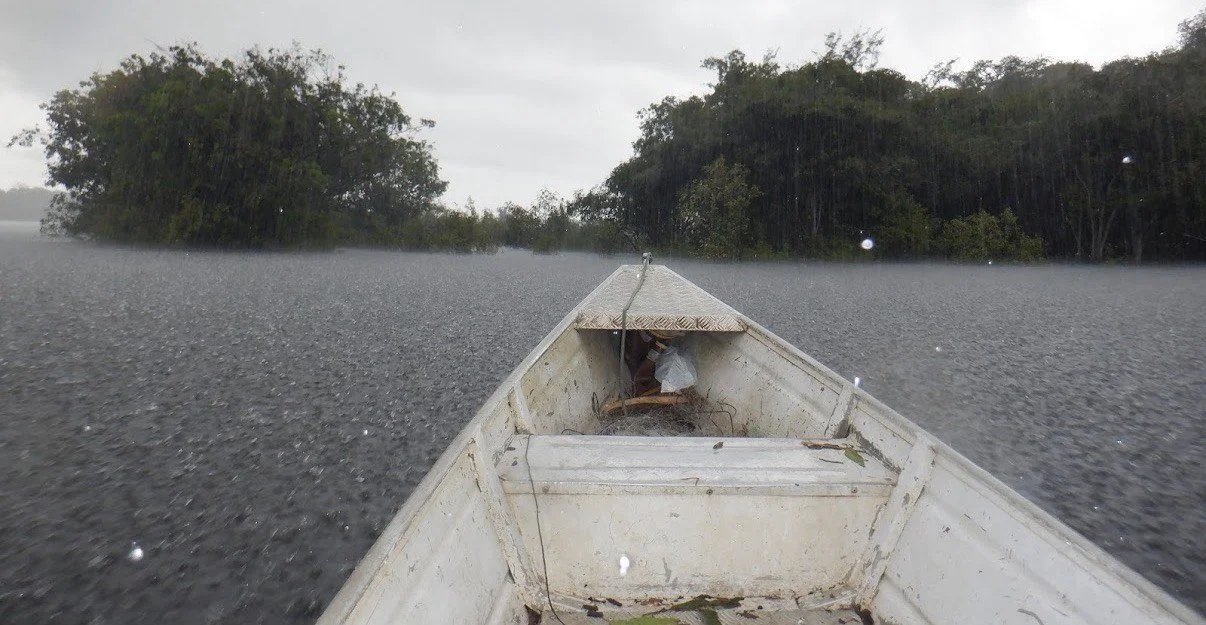
The rain there is nothing like the rain in the US Pacific Northwest where I’m from. On the Oregon coast it’s a light, persistent yet hydrating mist that blows upwards into your right ear. But in Suriname, it’s a 10 minute ordeal with an intensity on par with what I assumed the rapture would be like. The sound alone brings panic to whoever’s dog is so unlucky to be not be under a reinforced concrete shelter. Worse yet is whoever is stuck underneath a metal roof. The sound of rain on a tin roof in Suriname is about as soothing as an active war zone. In Suriname, the rain storms are localized to a few square blocks and everyone watches from the unaffected parts of the city with pity as one part is helplessly deluged. Sometimes I forget that rain drops fall from 5,000 feet, continuously building momentum, but the rain in the Amazon reminds you. The first time I rode my scooter into a wall of rain, I thought I simultaneously rode into a hoard of swarming killer bees.
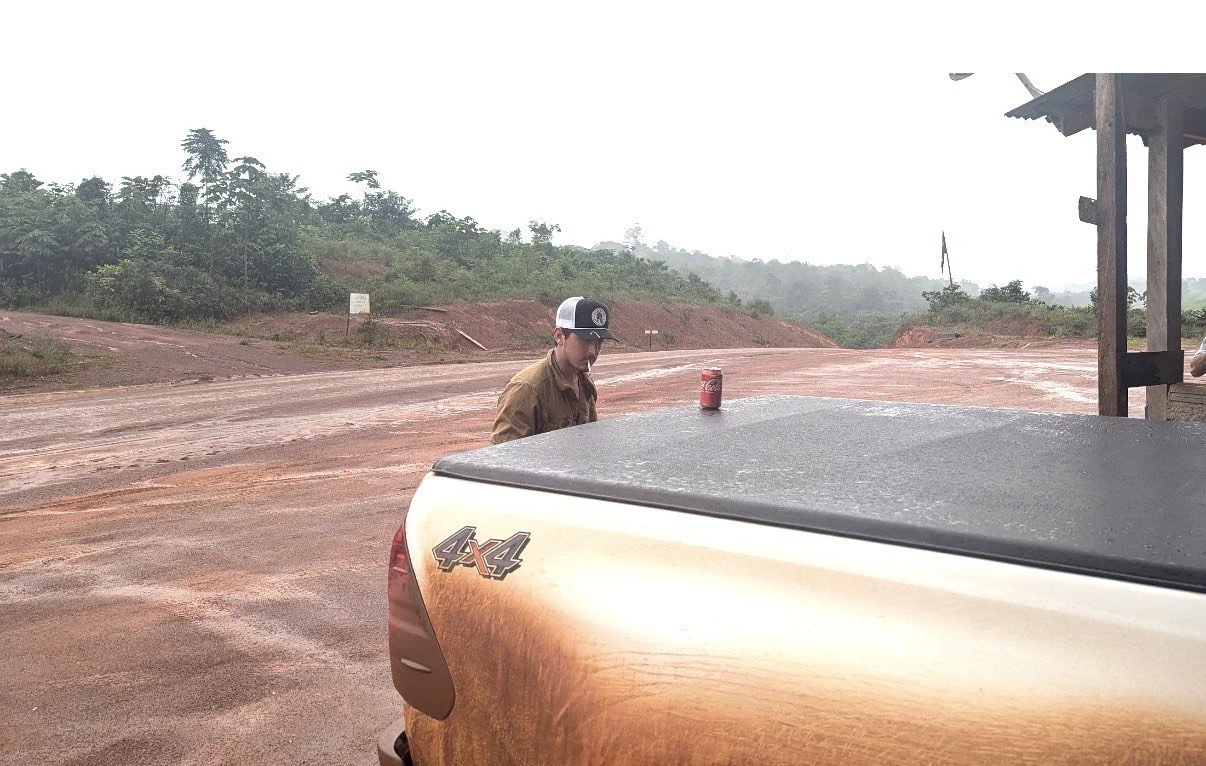
Moving slowly we made our way into French Guiana. Half expecting a continuation of Suriname, I was surprisingly met with another, completely different, mesh of cultures. Although diverse, it was very, very French. French cars, French food, French fries and French doors. Lots of cigarettes too. The road infrastructure was on par with Western Europe but the prices still reflected how incredibly isolated we were.
The beautiful yet singular city, Cayenne, was full of the iconic creole architecture found most notably in New Orleans. Creole architecture is categorized by its high ceilings, long wrap-around porches and large windows. I found the beautiful city hard to infiltrate. It was a shy and quiet tone and the rain only intensified that. We took time to dry off, do laundry, and eat delicate French pastries, then continued on.
It was between Cayenne and the Brazilian border where we were dropped off by a very French animal control worker who kindly gave us a ride. He had talked about when he was younger and visited for the first time from his home in mainland France before deciding to move there. Unfortunately we found ourselves stranded at a junction hours away from any town in a downpour. Between bouts of walking, we would stage under the massive leaves of the Coccoloba gigantifolia plants growing alongside the road. After a few hours we managed to catch a soaking ride to the border where we finally crossed, though illegally, via canoe into Brazil.