Along the Trans-Mongolian Railway
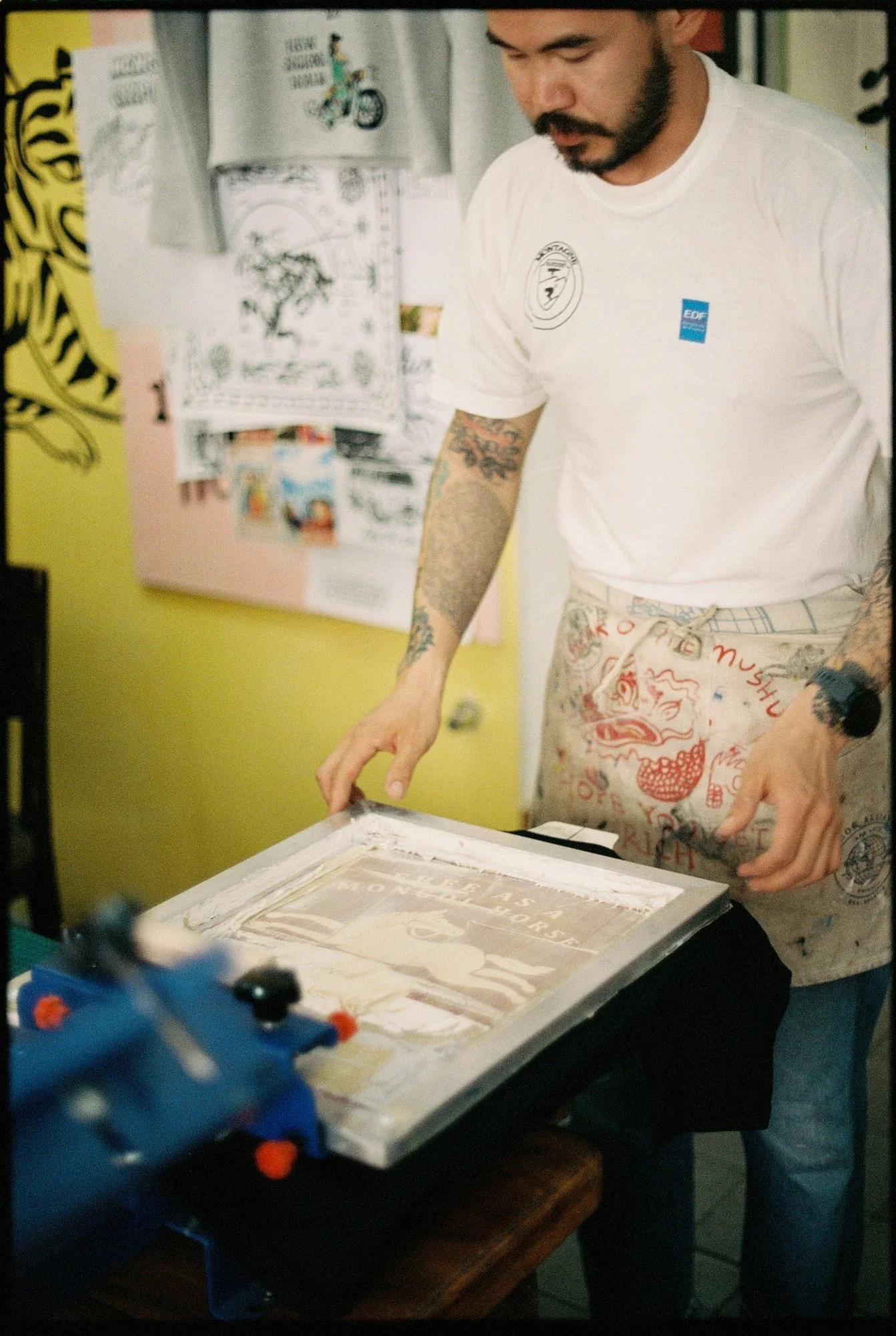
“Free as a Mongol Horse” is printed on the black T-shirt I had made at Donnie’s, a small printing shop in the center of Ulaanbaatar.
I came back to Mongolia’s capital after spending a week in the Orkhon Valley, surrounded by vast green grasslands. This is where the horses of the steppe roam freely across the landscape. I stayed in a ger, a traditional Mongolian tent. The nearest city lights were so far away that the Milky Way was visible at night. During the day I wandered through the village and the surrounding valley with my camera.
One evening I walked through the village of Kharkhorin until I reached the hill with the Russian–Mongolian Friendship Monument. From there the land opened up on the other side of the hill, revealing the winding streams of the Orkhon River below. A herd of
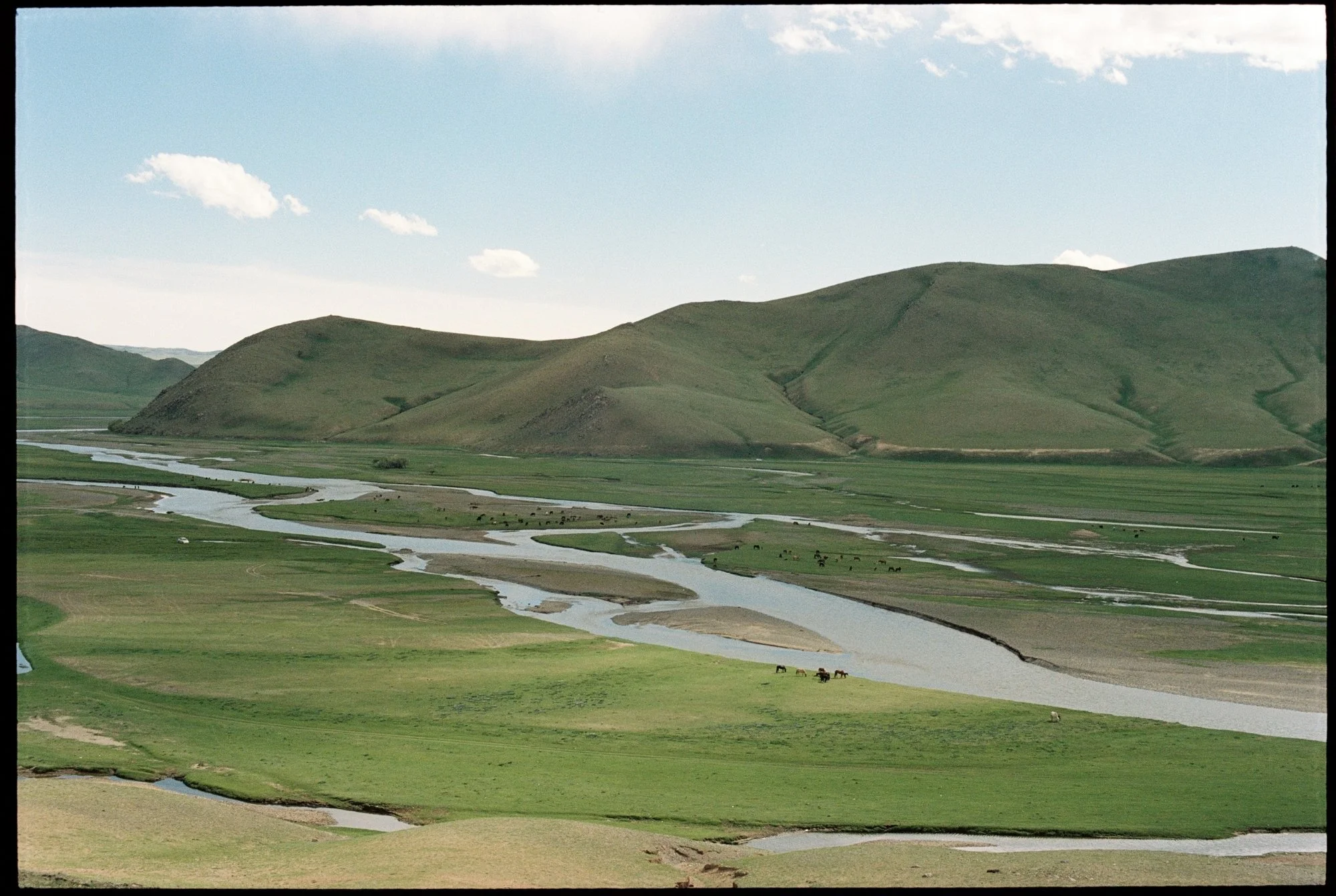
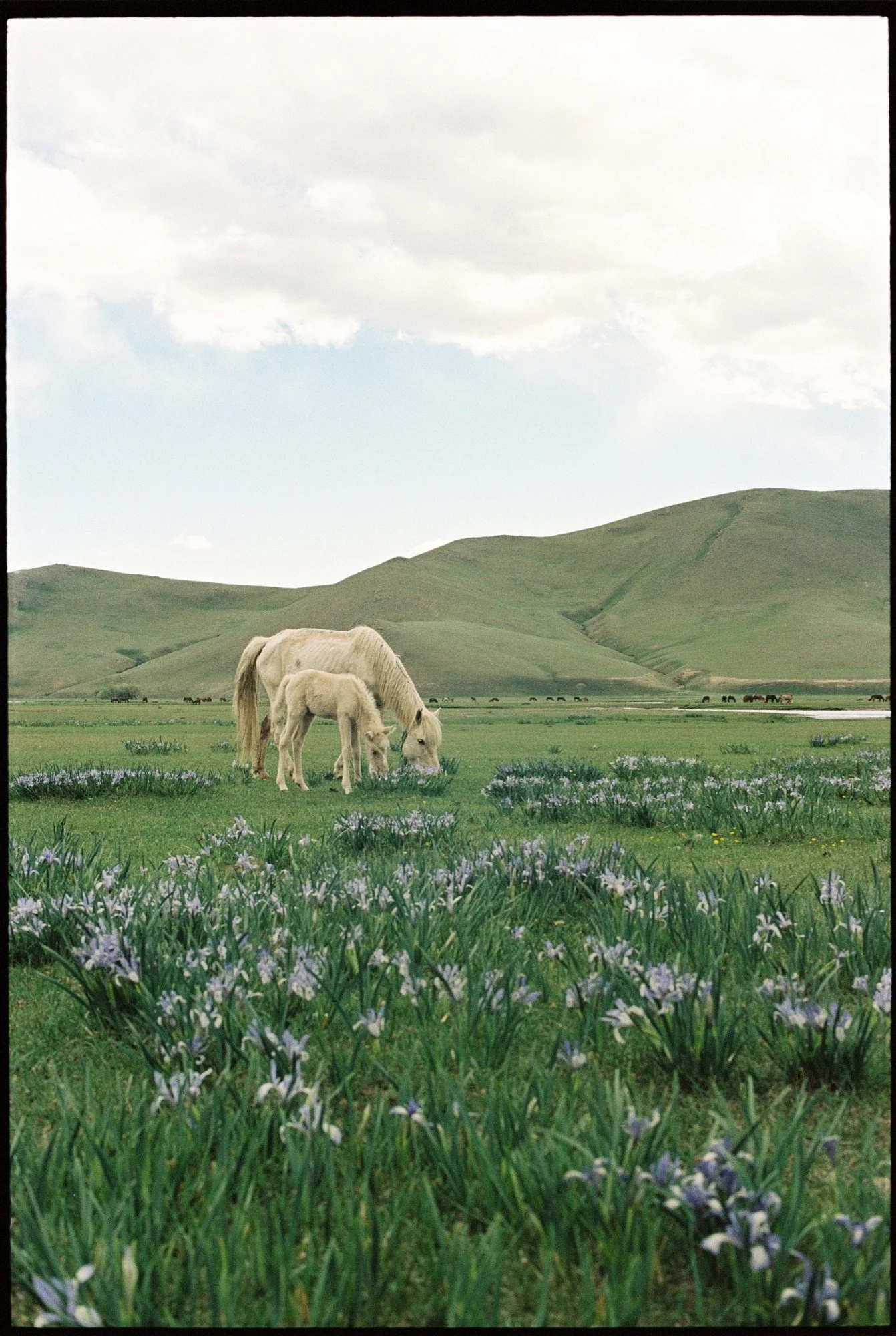
horses was grazing peacefully in the grass. Some of them are truly wild, others belong to nomadic families who let them graze freely without fences. When I walked down the slope and stepped over a small stream I suddenly found myself closer to the herd than expected. The horses were curious but kept their distance. Between the wild irises blooming across the meadow stood a mare with her foal. I took a photograph and then turned back toward the hill.
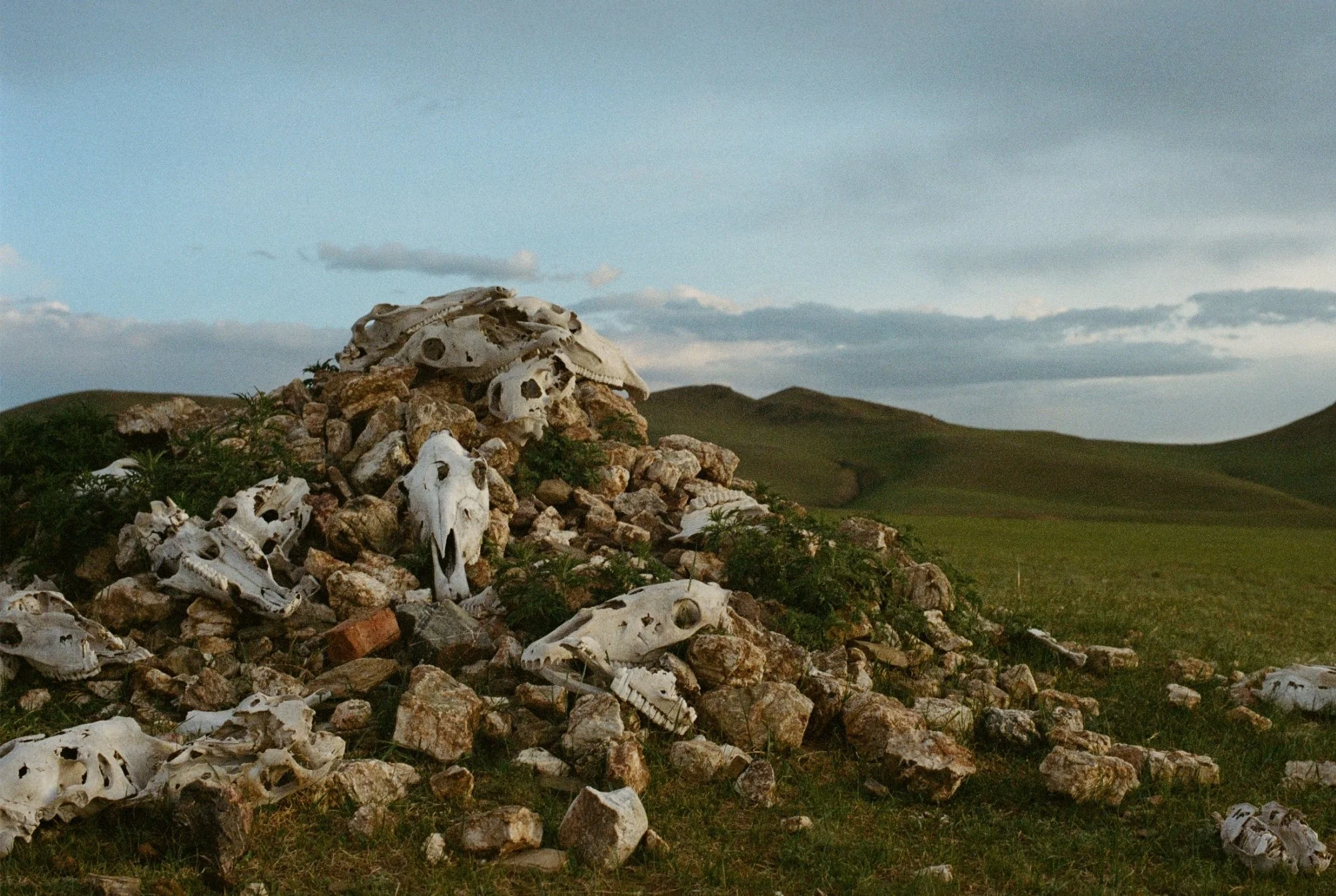
On my way back to the ger, on the outskirts of the village, I noticed something pale in the grass. As I approached, the shapes slowly became clearer. It was a mound of horse and cattle skulls resting among the stones, bleached white by the sun. Grass had begun to grow between the bones.
Back in Donnie’s printing shop in Ulaanbaatar, the paint is drying on the T-shirt. Free as a mongol horse.
My train leaves soon. I am heading south on the Trans-Mongolian Railway, the line that connects Ulaanbaatar with Beijing.
The turquoise train is already standing on its track when I arrive at the station. My ticket shows coach Nr. 21. My bunkbed is in a fourbed compartment. When I enter, a small boy is asleep on the lower bunk. His father shows me how to use the small ladder to climb up to my upper bed. I settle in as the train begins to roll softly. Soon the suburbs of Ulaanbaatar fall away behind us and the soft meadows of the steppe drift by.
I have decided to take the journey to Beijing slowly, stopping in a few places along the way. My first stop is Choir, a small railway town that once hosted a large Soviet military base. I chose Choir for a purely practical reason: I didn’t want to arrive somewhere in the middle of the night and search for accommodation in the dark. The train arrives at 9:30 PM. That seemed reasonable.
Ironically, Choir will turn out to be a small and rather unexpected adventure.
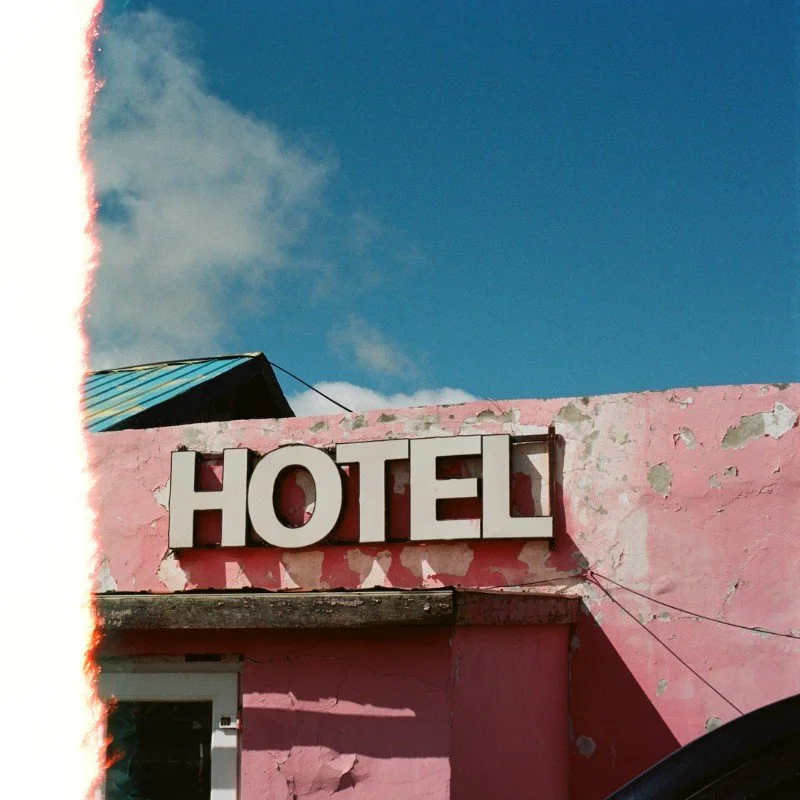
When I arrive at the hotel I saw on Google Maps, the reception is empty. Only three clocks are quietly ticking on the wall, one for Beijing, one for Ulaanbaatar, and one for Moscow. Behind closed doors in the hallway I hear a television playing and muted voices talking. After a while the hotel manager arrives. “The hotel is fully booked,” she tells me. I am surprised. A booked-out hotel here in the middle of nowhere? I hadn’t anticipated that. The only other hotel I saw on Google Maps is about half an hour away on foot. Outside it is already pitch dark.
In the end, I sleep in a room that serves as storage, office, laundry and surveillance room at the same time. During the night I am woken twice when the manager returns to retrieve things she had forgotten in the room.
In the morning I leave a chocolate bar on the desk as a small thank-you for letting me stay.
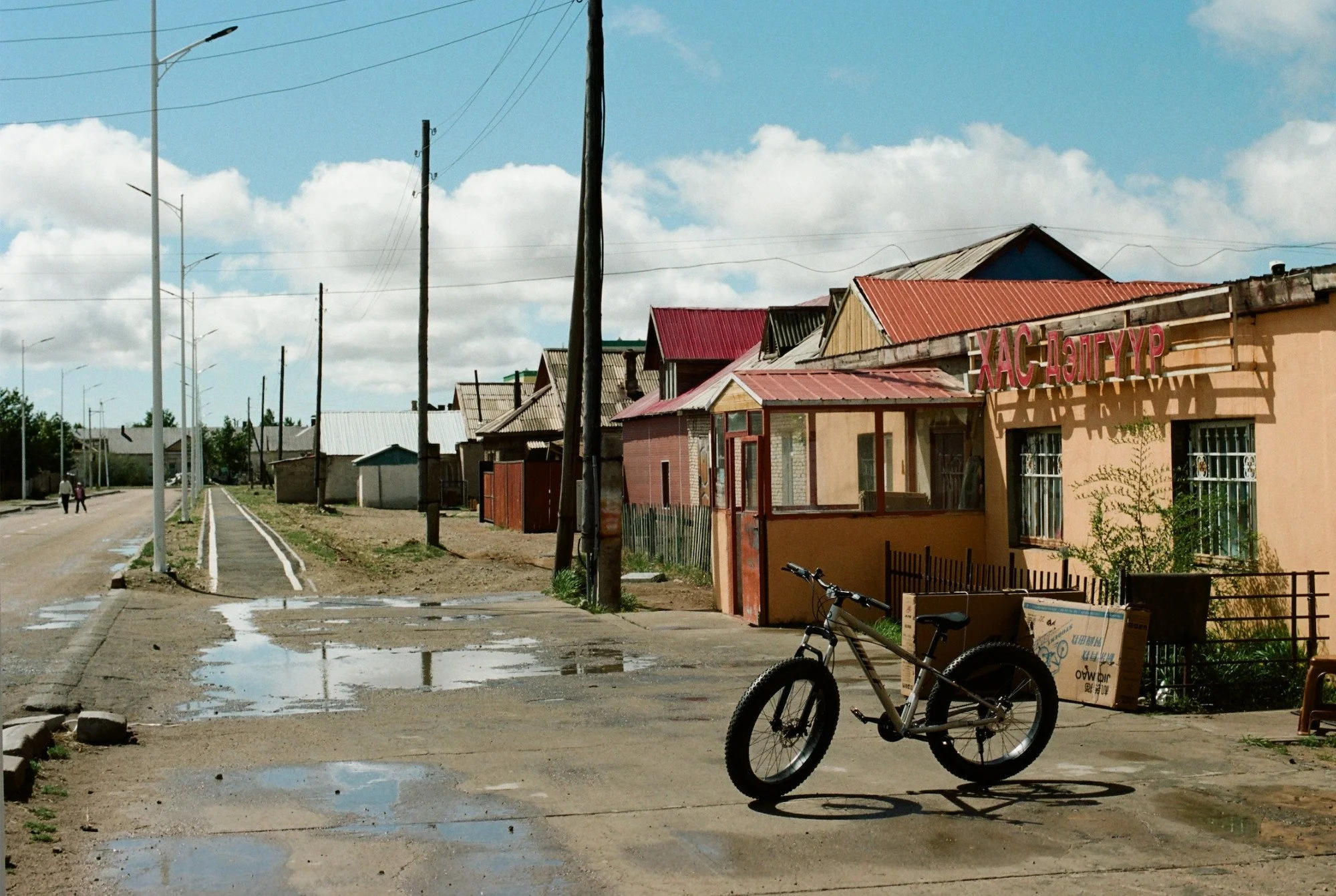
When I step out into the streets of Choir, it is windy and cold. Before catching the next train, I stop at a roadside restaurant for a warm bowl of goulash. A group of teenagers approach me with curious questions and we manage an entertaining conversation through a translator app.
Soon it is time to leave. The train arrives. This one will run through the night and reach the Chinese border in the morning.
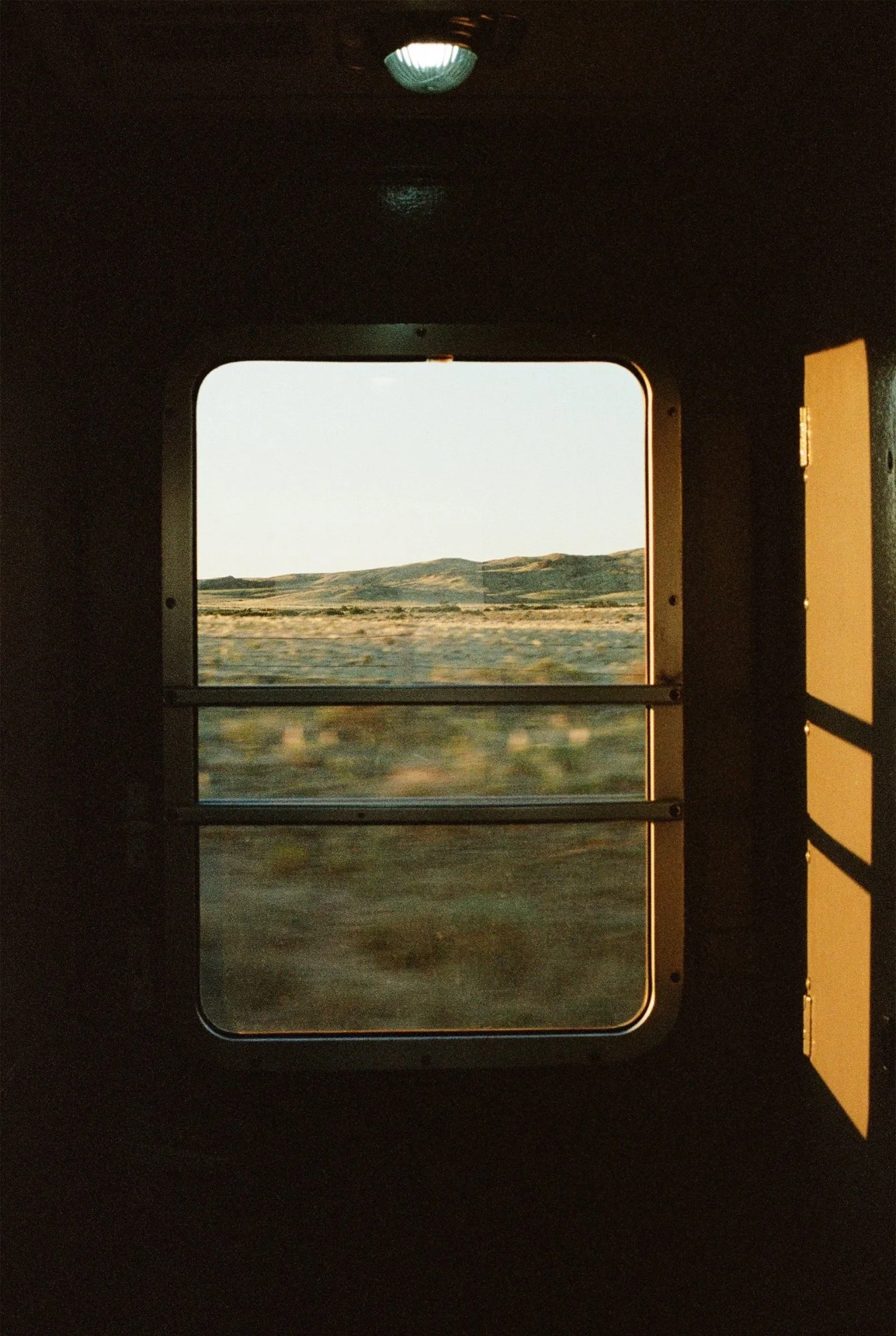
In the early morning I wake to sunlight on my face. Outside the window the landscape has changed. The soft green has given way to a drier terrain. At 7 AM we arrive in Zamyn-Uud, the Mongolian border town before the crossing into China. I get off the train to deal with the formalities of entering China. When entering Erlian, the border town on the Chinese side, Google Maps and my GPS stop working. I find the nearest mobile shop to get a local SIM card for 100 yuan. Soon my phone works again (and also Google, with the help of a VPN).
The next day I decide last minute to make a detour to Datong before continuing to Beijing.
On the train a woman walks through the corridor pushing a cart filled with instant noodles and other snacks. I want to buy a pack of instant noodles for ten yuan and try to pay with Alipay, but the internet connection is too weak and the payment fails. I look into my wallet and hand her a ten-yuan bill. She studies the note for a moment, then laughs. She shows it to the men sitting next to me and they also seem amused. When she gives the bill back to me I notice my mistake: I had handed her ten Mongolian tögrög instead of ten yuan. I apologize and try again with Alipay. This time it works. In the corridor of the train there is a hot water dispenser, and I prepare the noodles there. As the train approaches Datong, a young man approaches me and asks where I am from. We communicate through a translator app. His name is Tian. The others who had laughed at my Mongolian banknote are now curious as well and ask him questions to translate to me. It turns out they thought I was American and that I had tried to pay with dollars.
Tian helps me order a taxi when I arrive in Datong. He tells me that if the driver tries to charge more than the agreed price, I should cancel the ride. I thank him for his help and we exchange WeChat contacts.
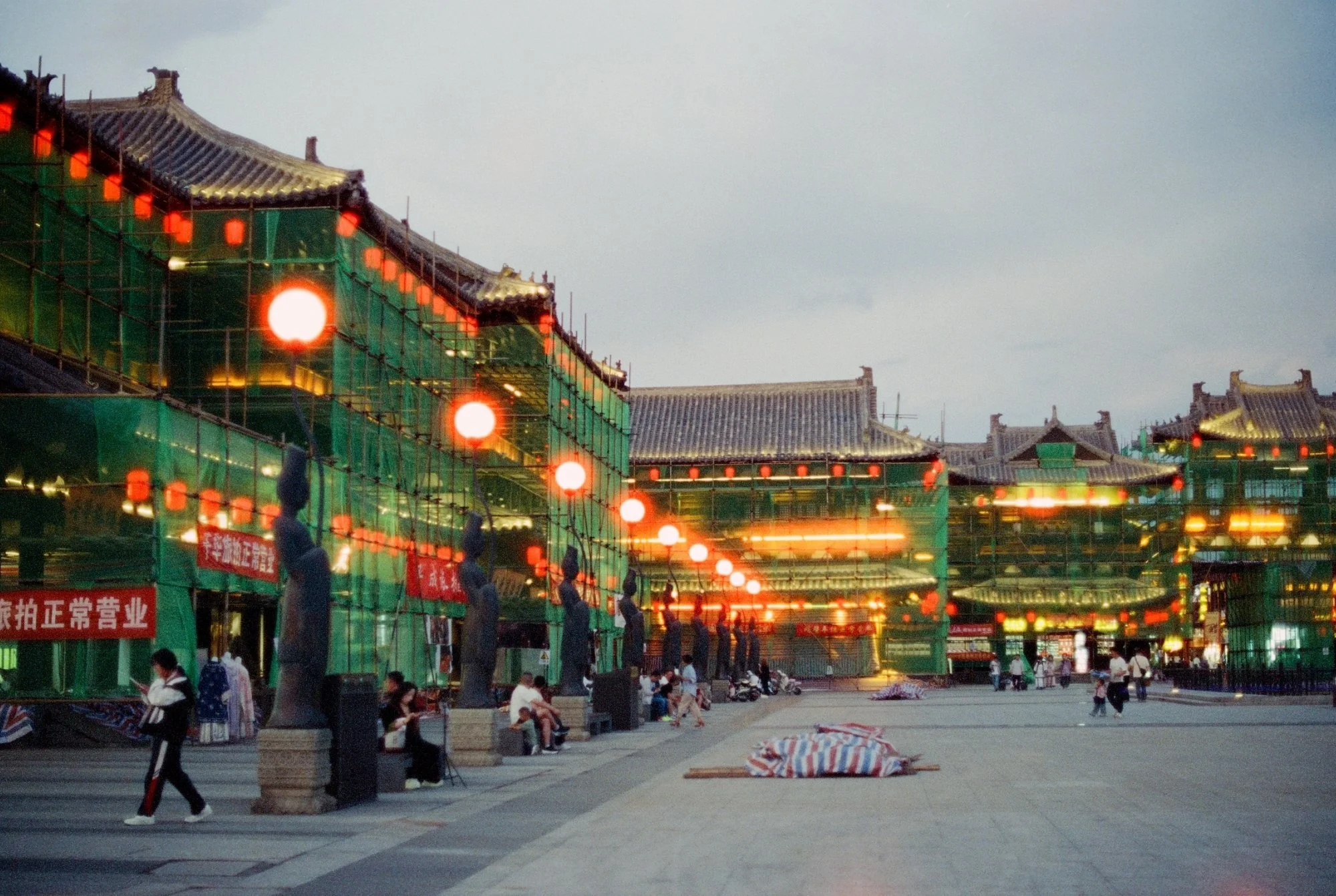
Everything works well. From the taxi window I watch the city pass by: bright lights, delivery drivers on scooters, shops and restaurants still open late into the evening.
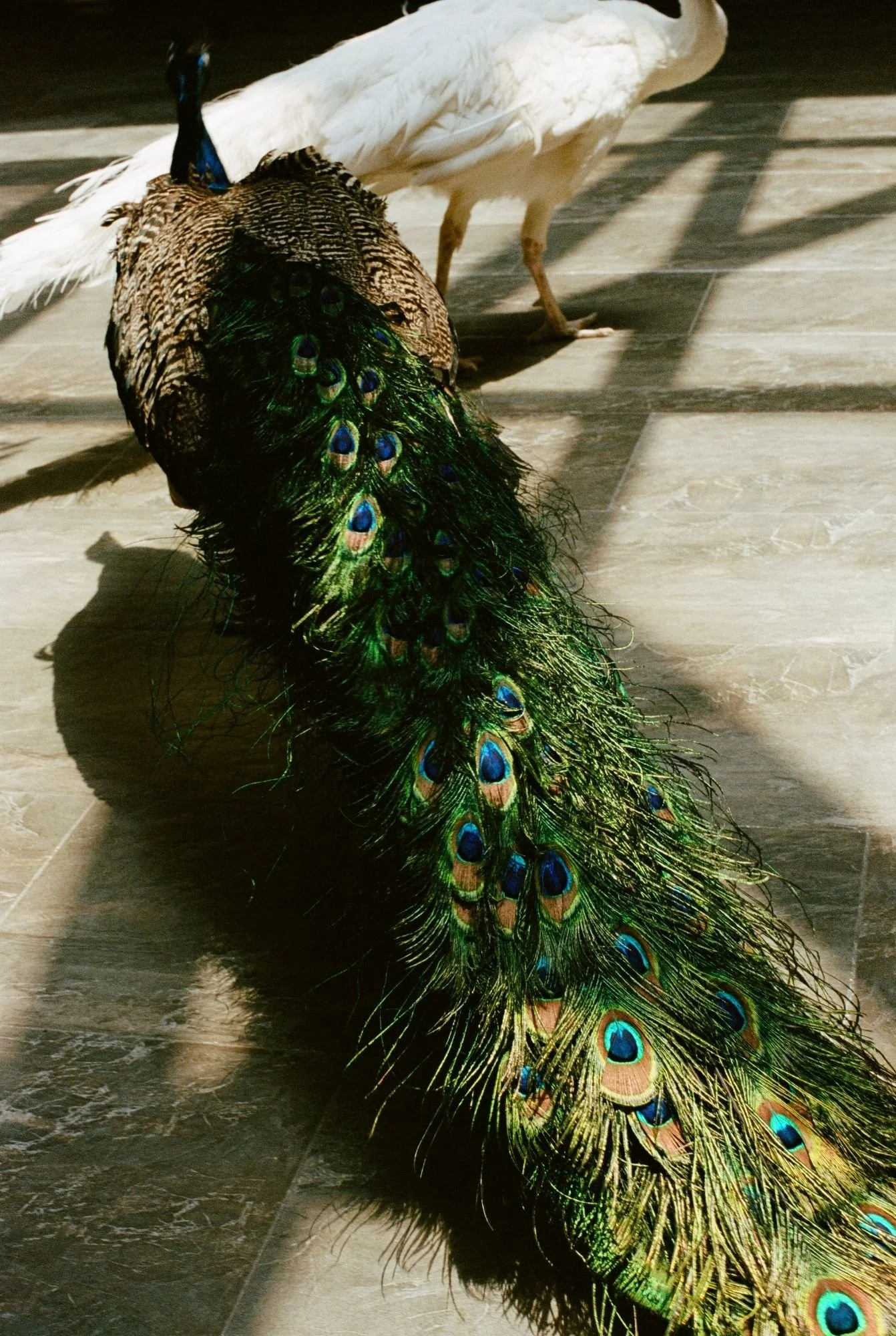
I stay in Datong for a few days at Renyi Inn, a small oasis in the middle of the city. On the first floor there is an open hall where a white and a blue peacock wander freely. In the middle a pond with red koi fish bubbles quietly. Nearby, squirrels sit in a cage and a grey parrot on a perch. Small birds chirp from all sides.
Thanks to Tian, I get many good recommendations for what to do in the city. The first place he suggested is Huayan Temple.
Before it opens, at 7 AM , a few women are dancing together on the plaza in front, moving to music from a small speaker. Closer to the temple, some people are playing featherball. Inside the temple, the halls are dark and cool.
The morning light moves slowly across the floors.
A little later Tian sends me another message:
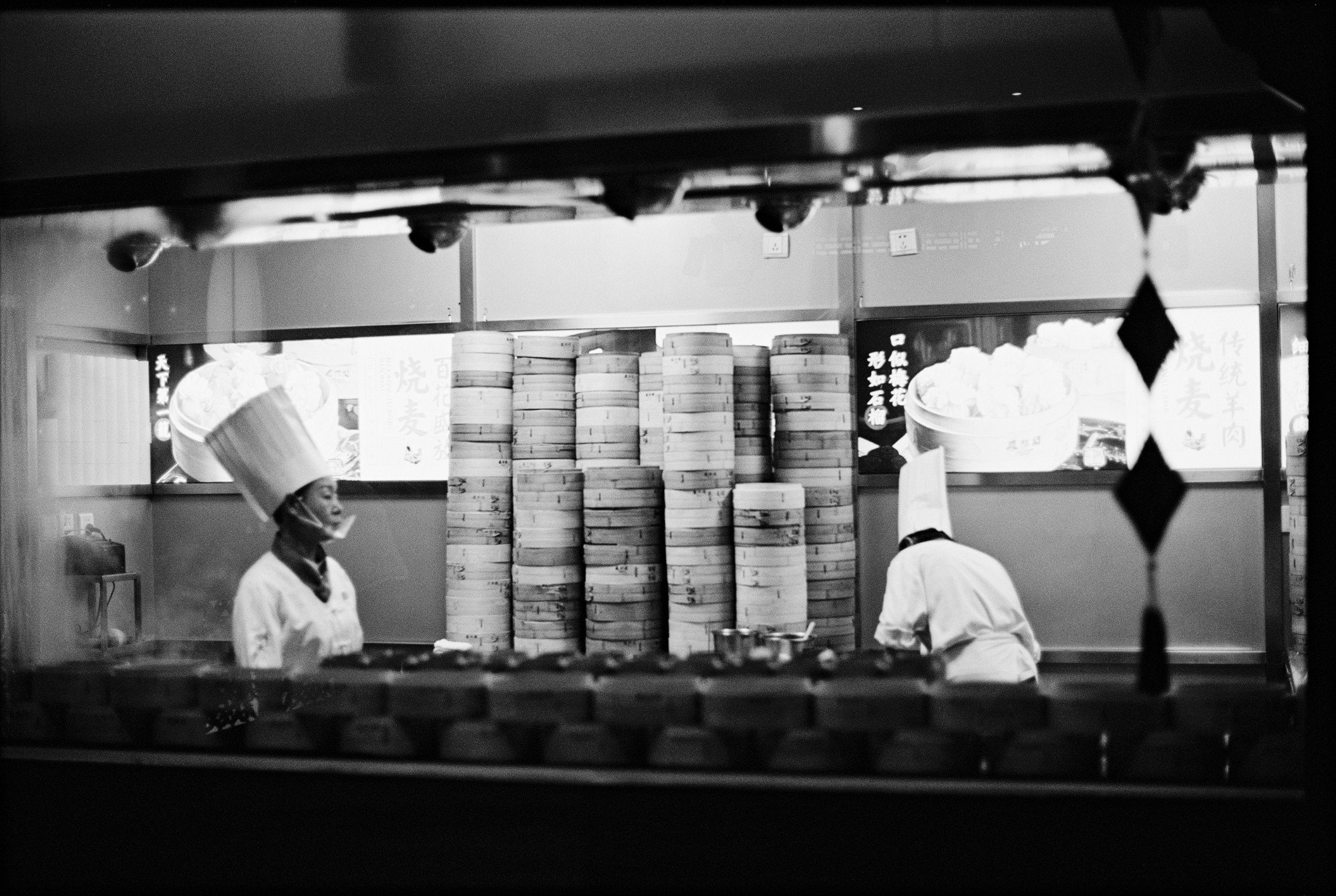
“After the temple, go to this restaurant and try these dishes. You can show this to the waiter.”
黄米凉糕 ×1
黄花烩菜 ×1
羊肉烧麦 ×1
It turns out I order yellow millet cake, braised vegetables with daylily flowers, and lamb dumplings. A fantastic meal.
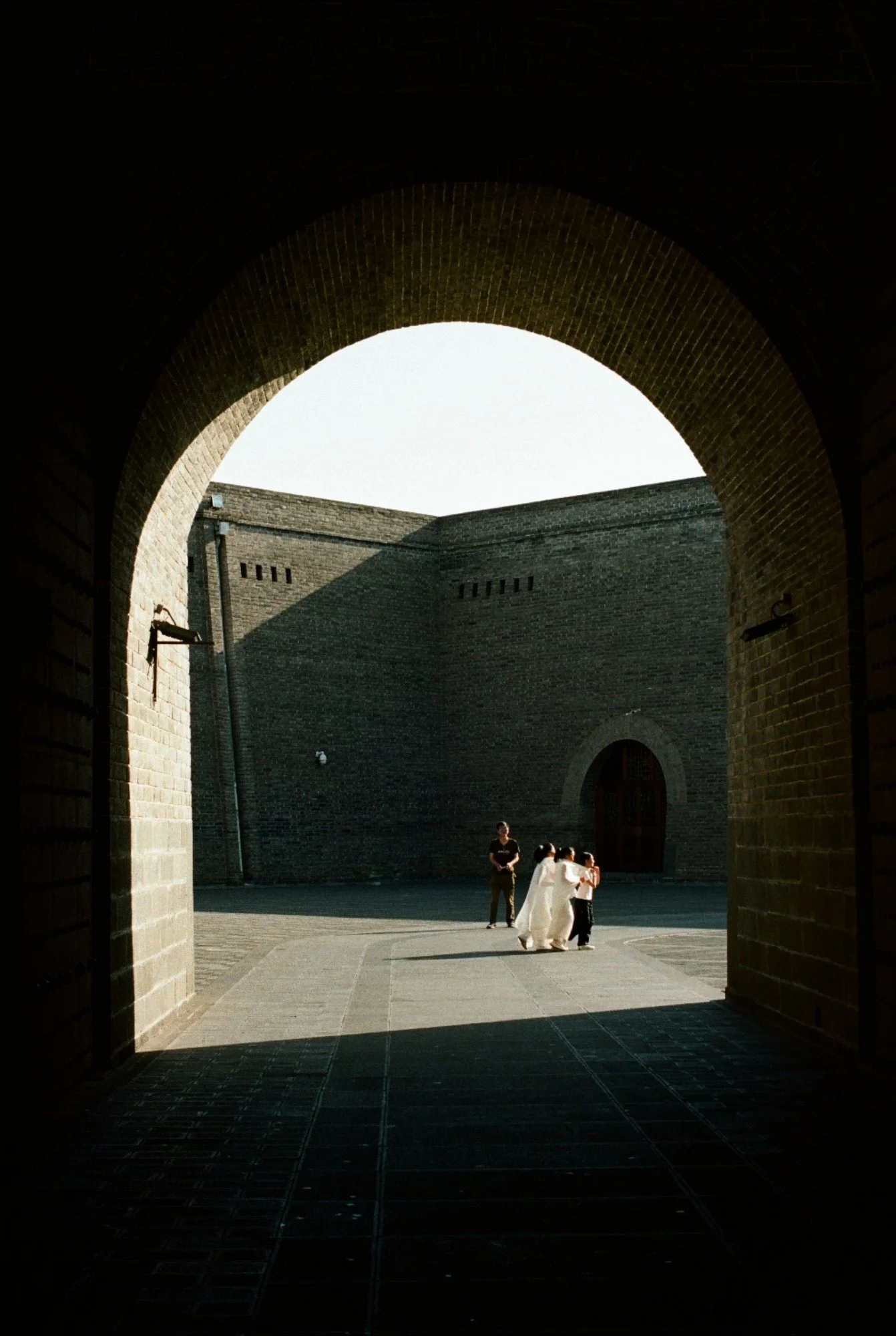
Later that day Tian and I meet to walk along the city walls of Datong. From the top I can see wide streets and apartment towers spreading out across the city. He tells me that much of what looks like the old town has actually been rebuilt in recent years. With the help of our phones, we talk about our daily lives.
The walls are lively. Somewhere nearby a group is playing drums. People ride around on small pedal carts, others stroll along the path or stop to look out over the city.
A few days later, I pass some market stalls in the evening. A woman approaches me.
“Excuse me, where are you from?” she asks.
She introduces herself as Yan Yan. She is a teacher in Datong and asks if I would be willing to record a short video interview for her students. We talk about travelling, languages, family and our work. In the end, the video lasts 18 minutes. She wants me to meet her family and invites me for a meal at her house the next day.
“I’m one of the good guys”, she tells me the next morning as I get on the back of her scooter, “You can trust me”.
We move through the city, weaving between cars, until we arrive behind an apartment complex. Her home is beautiful, with a view of the high- rise buildings. I greet her family: her mother, her sister, her nephew and her daughter. A moment later, her daughter leads me to her room to show me her hamster. There is also a cat circling our legs.
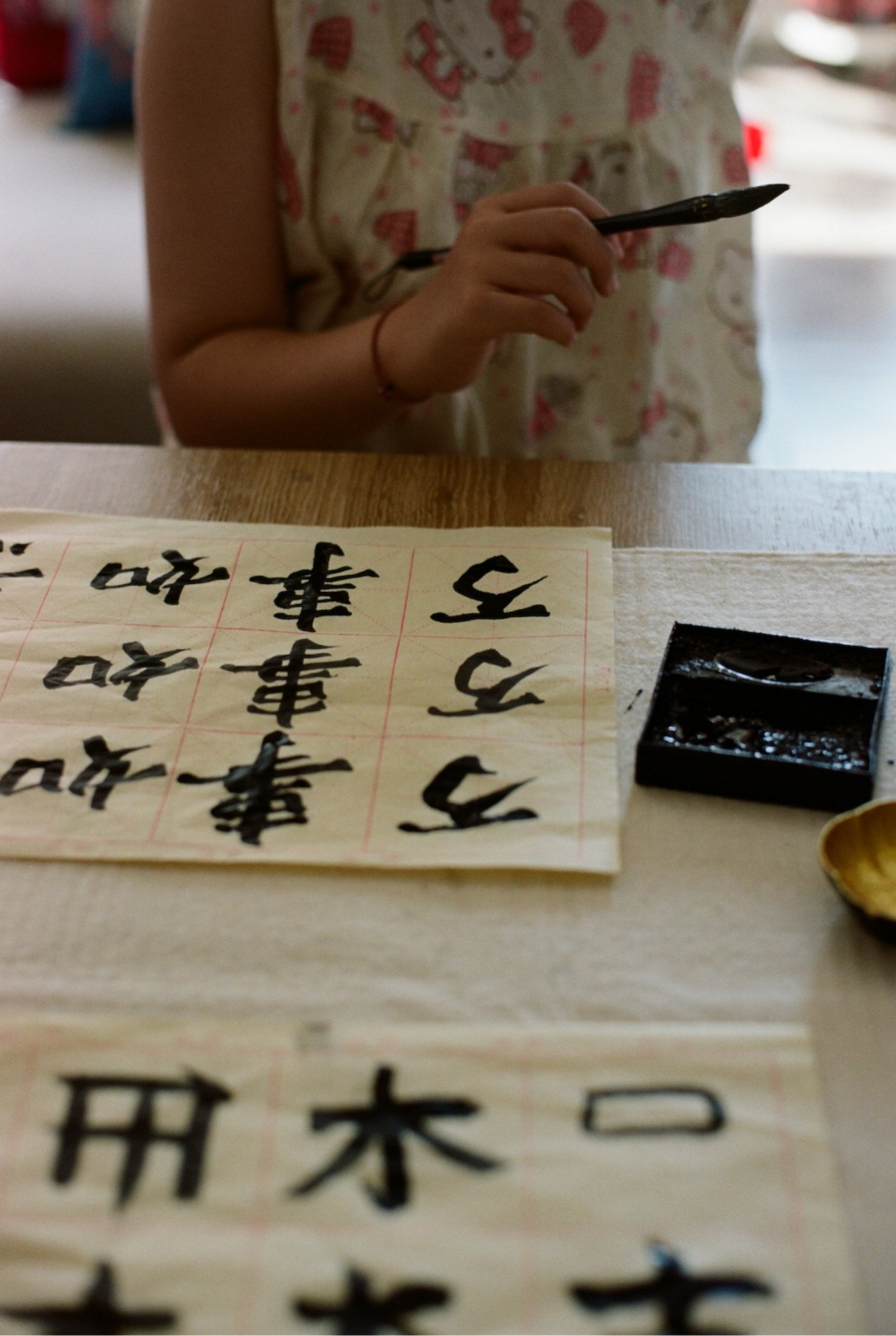
Later, Yan Yan’s mother begins preparing dumplings and I help with the filling. While they cook, Yan Yan introduces me to calligraphy. She practices regularly. With a brush and black ink, her daughter and I try to copy the characters onto thin paper.
“This one means luck,” she says. I let my brush glide slowly across the page, repeating the lines until the paper is filled.
With that evening still lingering, I leave Datong behind.
Next stop: Beijing.